Azelaic and Mandelic Acid Serums
Explore cosmetic face serums and learn how their ingredients fit into a daily routine. Start with the current product list and read each complete formula rather than assuming every ingredient named in the collection is available in every product. Compare texture, directions and intended cosmetic use.
Azelaic acid and mandelic acid are different ingredients, and the finished formula determines how a product should be used. Follow its directions for introduction and frequency. Choose one new step at a time, alongside a comfortable moisturizer and a daytime sunscreen used according to its label.
Before ordering, check the current variant and availability on the product page. Review the full ingredient declaration if you have a known ingredient sensitivity, and follow the finished package rather than general collection copy. Contact Clean + Kind with a product question. Free US shipping starts at $40, and the published return policy explains the 60-day guarantee and its terms. You can return to the product pages whenever you need to compare a detail or check the current range.
SHOP TALLOW DRY SKIN REPAIR
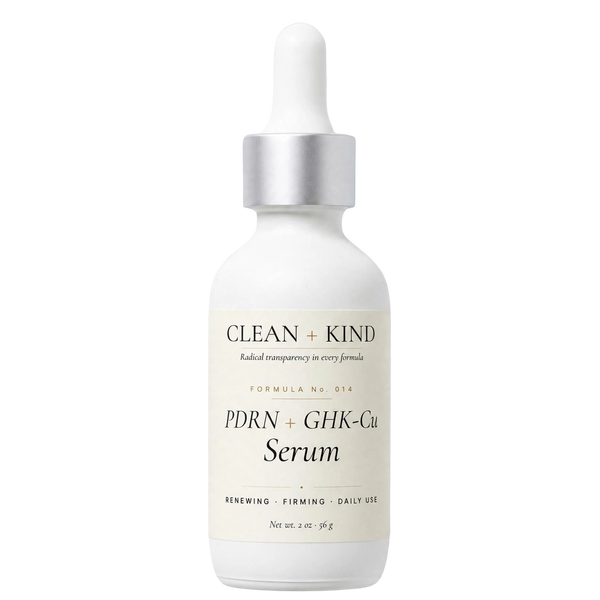
Copper Peptide Serum with GHK-Cu + PDRN
$19.99
Shop Copper Peptide Serum with GHK-Cu + PDRN →Free shipping on orders $30+
PREMIUM INGREDIENTS
Non-nano zinc oxide
Physical UV filter that reflects UVA/UVB rays — no oxybenzone, octinoxate, or synthetic chemical filters.
→ What is non-nano zinc oxide?Grass-fed tallow
Grass-fed tallow Rich in vitamins A, D, E, and K — supports the skin's moisture barrier without clogging pores.
→ What is Grass-fed tallow?Organic red raspberry oil
Organic red raspberry oil Antioxidant-rich plant oil that supports a comfortable, non-greasy finish across all formulas.
→ Full ingredient glossaryOrganic vitamin E
Organic vitamin E Antioxidant support that complements the tallow base for everyday barrier protection.
→ Full ingredient glossaryWHAT CUSTOMERS ARE SAYING
"Very nice product! Will purchase again."
"I prefer it to other non-nano zinc products I've used — didn't make me break out or have an allergic reaction."
"Nourishing to skin, plays well with other products, easy to wash off."
Serum FAQs
-
Azelaic acid: A naturally occurring acid found in grains and produced by healthy skin flora. Commonly used to target hyperpigmentation, redness, and uneven tone. Well tolerated by sensitive and rosacea-prone skin.
Mandelic acid: An alpha hydroxy acid derived from bitter almonds. Its larger molecular size means it absorbs more slowly than most AHAs, which reduces the likelihood of irritation. Used to exfoliate, improve texture, and fade dark spots.
Fragrance-free base: Formulated without synthetic fragrance, one of the most common causes of skin irritation in conventional skincare.
Cleanliness score 98/100: Every formula is vetted against the full Clean + Kind ingredient standard.
Occlusive texture:
Richer and more occlusive than a standard lotion, these formulas create a protective layer that helps prevent moisture loss while the skin barrier repairs itself.
Fragrance-free:
No synthetic fragrance, essential oils, or common irritants. Suitable for reactive, eczema-prone, and post-treatment skin.
-
Azelaic acid is a naturally occurring acid found in wheat, barley, and rye, and also produced by bacteria that live on healthy skin. It reduces excess pigment production, calms redness, and gently exfoliates the surface. It is one of the few topical actives considered safe during pregnancy and is commonly used for rosacea and acne-prone skin.
-
Mandelic acid is an alpha hydroxy acid derived from bitter almonds. Its molecular structure is larger than most AHAs, so it absorbs into skin more slowly, making it less likely to cause irritation than glycolic or lactic acid. It exfoliates the surface, fades hyperpigmentation, and improves texture.
-
Azelaic acid is primarily used for redness, pigmentation, and inflammation, and is a common recommendation for rosacea and post-acne marks. Mandelic acid is an exfoliant used to improve texture, fade dark spots, and brighten skin. The two address overlapping but distinct concerns.
-
Both azelaic acid and mandelic acid are generally well tolerated by sensitive skin. Mandelic acid's larger molecular size means it penetrates gradually. Azelaic acid is frequently used by people with rosacea. Starting every other day and building up is a sensible approach for most people.
-
Both acids can be used alongside most other skincare. Using either with a high-strength retinol or another exfoliating acid on the same application may increase irritation. Both are compatible with niacinamide, hyaluronic acid, and SPF. SPF in the morning is recommended when using any exfoliating active.
-
Yes. Exfoliating actives increase skin sensitivity to UV. Daily SPF use is recommended when using azelaic or mandelic acid, particularly in the morning.
-
Azelaic acid is widely considered safe for topical use during pregnancy. Mandelic acid has limited pregnancy safety data available. Consult your healthcare provider before using any new active during pregnancy.
-
Conventional serums often use low concentrations of actives alongside water, synthetic fragrance, and cheap fillers. Our formulas use effective concentrations with no unnecessary additives, reflected in a Cleanliness Score of 98/100.